
Fitness guide
Start strong
A practical guide to beginner workouts for the gym — weekly schedules, exercise breakdowns, common mistakes, and realistic timelines for building strength and endurance.
Complete guide to gym routines, strength training, HIIT, cardio, yoga, and fitness equipment in the US. Build a plan that fits your goals and schedule.
Read the guide
A practical guide to beginner workouts for the gym — weekly schedules, exercise breakdowns, common mistakes, and realistic timelines for building strength and endurance.

Learn how to build a gym routine for strength, cardio, or HIIT that fits your schedule and produces real results. Practical plans, tips, and common mistakes covered.

Learn how cardio training improves heart health, burns fat, and boosts endurance. Compare methods, intensities, and weekly structures to find what fits your goals.




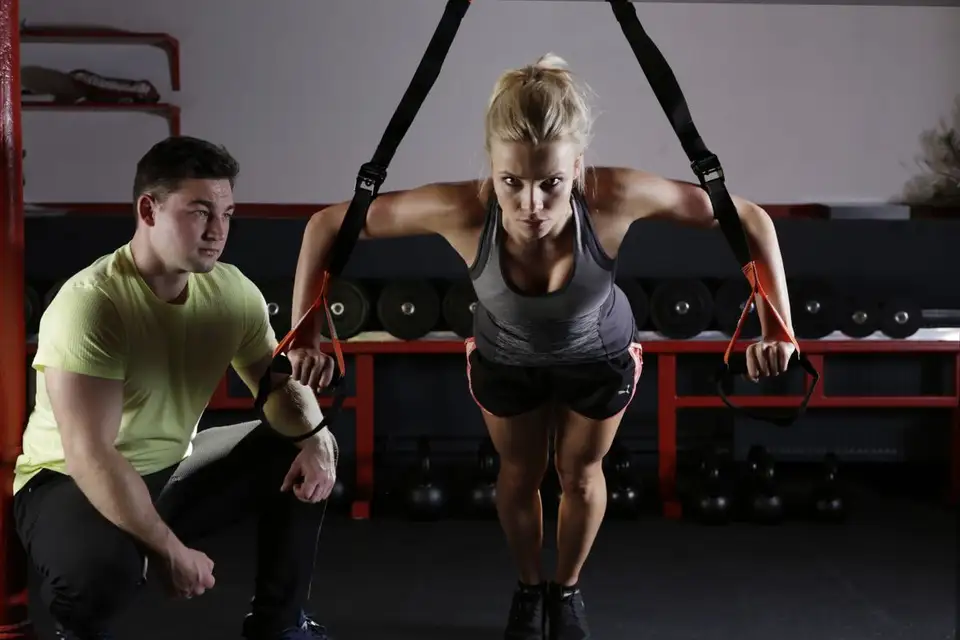


















Fitness advice online tends to fall into two camps: oversimplified motivational content that ignores individual differences, or overly technical programming that assumes you already know what you are doing. Neither serves the person standing in a gym for the first time in years, or the intermediate lifter whose progress has stalled and cannot figure out why. This guide is built around practical decision-making - how to choose a training style that matches your goals, how to structure a week that you can actually sustain, and how to interpret the flood of fitness data (wearables, research studies, social media advice) without getting overwhelmed by it. Whether the priority is strength, fat loss, mobility, or simply building a habit that survives a busy schedule, the sections below break down what actually drives results in 2026's US fitness landscape.
Most people begin with the wrong question. Instead of "what workout should I do," the more useful question is: what does my body need right now, and what can I realistically sustain?
In 2026, the US fitness market has expanded significantly — gym membership rates rebounded post-pandemic and now sit at approximately 64 million active members nationwide, according to IHRSA data. Home gyms became mainstream. Hybrid training — splitting sessions between the gym and home — is now the default for millions.
The problem is not access to fitness information. It's too much of it, often contradictory, often untested on real populations.
This guide cuts through that. It covers:
Understanding the major categories of exercise prevents the mistake of doing too much of one thing or ignoring a whole system entirely.
| Training Type | Primary Benefit | Frequency (general) | Time per Session |
|---|---|---|---|
| Strength Training | Muscle mass, bone density, metabolism | 3-4x per week | 45-75 min |
| HIIT | Cardiovascular efficiency, fat loss | 2-3x per week | 20-35 min |
| Steady-State Cardio | Aerobic base, recovery, mental health | 2-4x per week | 30-60 min |
| Yoga / Mobility | Flexibility, joint health, stress reduction | 2-5x per week | 20-60 min |
| Sport / Recreational | Athletic performance, coordination | Variable | Variable |
Most people benefit from combining at least three categories. A realistic weekly plan for someone with 4 training days might look like:
That is not a template — it is a starting reference point. Adjustments depend on recovery, sleep quality, job demands, and existing injury history.
This is the most misunderstood part of beginner training. New lifters tend to copy splits designed for advanced bodybuilders — chest day, arm day, leg day — before they have developed the neuromuscular coordination to benefit from them.
A more effective beginner approach is full-body training built around fundamental movement patterns:
Training these patterns 3 times per week produces faster, more measurable strength gains in months 1-6 than isolation work. Research published in the Journal of Strength and Conditioning Research consistently shows beginners make larger gains from compound, full-body sessions run 3x/week than from 5-day splits.
Rep ranges for beginners: 3 sets of 8-12 reps at moderate load. Rest 60-90 seconds between sets. Prioritize form over weight.
After 6-12 months of consistent training, the "do the same thing and get stronger" phase ends. The body adapts. Progress slows.
This is where periodization matters — intentionally varying volume, intensity, and exercise selection over time.
Common intermediate structures:
Upper/Lower Split (4 days)
Push/Pull/Legs Split (6 days or 3-day rotating) More volume per muscle group. Works well for intermediate lifters whose recovery allows it.
At the intermediate stage, tracking progressive overload becomes critical. That means logging your lifts and ensuring measurable progression — either in weight, reps, or sets — over each training block (typically 4-6 weeks).
Advanced gym-goers are not just lifting heavier — they are managing training age, accumulated fatigue, competition prep, or specific body composition targets.
Key differences at the advanced level:
Advanced does not mean complicated. Many elite natural athletes run simple programs — the complexity is in the execution and the adjustments made in response to data.
Every strength training methodology — powerlifting, bodybuilding, functional fitness, CrossFit — relies on one underlying principle: progressively making training harder over time.
This can happen through:
Without progressive overload, the body has no reason to adapt. It maintains the status quo.
A practical tracking method:
| Week | Exercise | Weight (lbs) | Sets | Reps | Notes |
|---|---|---|---|---|---|
| 1 | Back Squat | 135 | 3 | 8 | Comfortable, add weight |
| 2 | Back Squat | 145 | 3 | 8 | Solid |
| 3 | Back Squat | 145 | 3 | 10 | Increase reps |
| 4 | Back Squat | 155 | 3 | 8 | Progress on weight |
This is not glamorous. It works consistently over years.
Both categories belong in a complete routine. The mistake is doing too much of one.
Compound movements (squat, deadlift, bench press, overhead press, pull-up):
Isolation movements (bicep curl, lateral raise, leg extension, calf raise):
A working ratio for time-efficient training: 3 compound lifts + 2-3 isolation accessories per session.
HIIT (High-Intensity Interval Training) has a specific structure: alternating brief maximal-effort intervals with defined recovery periods. It is not simply working hard at the gym.
True HIIT protocols:
| Protocol | Work Interval | Rest Interval | Rounds | Total Time |
|---|---|---|---|---|
| Tabata | 20 seconds | 10 seconds | 8 | 4 minutes |
| 30/30 | 30 seconds | 30 seconds | 10-15 | 10-15 min |
| 40/20 | 40 seconds | 20 seconds | 10-12 | 10-12 min |
| Sprint Intervals | 15-20 seconds | 90-120 seconds | 6-8 | 12-18 min |
The "intensity" in HIIT matters. The work intervals need to reach 85-95% of maximum heart rate to produce the cardiovascular and metabolic adaptations associated with HIIT.
All three can work. Selection depends on injury history and access.
Cardio machines (assault bike, rower, ski erg):
Bodyweight HIIT:
Weighted HIIT:
A frequent mistake among motivated beginners: doing HIIT daily because it feels efficient.
The CNS (central nervous system) recovers more slowly than muscles. High-intensity work taxes the CNS heavily. Exceeding 3 HIIT sessions per week without adequate sleep and nutrition leads to declining performance, elevated cortisol, and increased injury risk.
Practical limit for most people:
Zone 2 cardio — steady-state aerobic work at 60-70% of maximum heart rate — gained significant attention in the mid-2020s following research from sports physiologists and endurance coaches.
Zone 2 specifically trains mitochondrial density and fat oxidation. In practical terms: the body gets better at using fat as fuel, producing energy more efficiently, and recovering between hard efforts.
Zone 2 indicators:
Good Zone 2 options:
The case for incorporating Zone 2 even for primarily strength-focused trainees: it accelerates recovery between sessions by improving blood flow and metabolic efficiency.
The "interference effect" — the concern that cardio inhibits strength and hypertrophy gains — is real but overstated for most recreational athletes.
Research shows the interference effect is most relevant when:
Practical approach to minimize interference:
Yoga's reputation in fitness circles is often mischaracterized — dismissed by some strength athletes as too passive, overestimated by others as a complete fitness solution.
What yoga actually contributes to a training program:
A meta-analysis from 2024 examining yoga's effects on strength athletes found measurable improvements in hip mobility, thoracic rotation, and overhead shoulder mobility — all of which directly affect squat, deadlift, and pressing mechanics.
Not all yoga classes serve the same purpose in a training program.
| Yoga Style | Intensity | Primary Benefit | Best For |
|---|---|---|---|
| Vinyasa | Moderate | Cardiovascular + mobility | Active recovery days |
| Yin | Low | Deep tissue / joint mobility | Post-heavy training |
| Ashtanga | High | Strength + endurance | As a training session |
| Restorative | Very Low | CNS recovery, stress | Deload weeks |
| Power Yoga | Moderate-High | Core strength + flexibility | General training support |
One 30-60 minute yoga or targeted mobility session per week produces measurable improvements in flexibility and joint range of motion within 8-12 weeks.
The home gym industry expanded dramatically and the equipment quality at every price point improved considerably.
Minimal setup (under $500):
Intermediate setup ($500-$2,000):
Comprehensive setup ($2,000-$5,000+):
At a well-equipped gym, the hierarchy of equipment value:
Machines with the lowest functional transfer: most fixed-path leg machines (leg extension, leg curl) — useful for isolation but should not anchor a program.
Wearable fitness technology has matured substantially. Devices now measure:
What the data is actually good for:
What it should not drive: anxiety over single-day metrics. HRV varies significantly based on alcohol, caffeine, stress, and sleep position.
Motivation is useful for starting. It is unreliable for maintaining.
Research on habit formation — including James Clear's work and subsequent academic studies on behavioral change — shows that the most consistent exercisers are not more motivated. They have built systems that reduce friction.
Friction reduction looks like:
The research benchmark: 66 days to solidify a new habit (University College London, replicated multiple times). Not 21 days — that number has been debunked.
Body weight is the most watched and least useful single metric for fitness progress.
A more informative set of metrics:
| Metric | How to Measure | Frequency |
|---|---|---|
| Strength numbers | Log key lifts (squat, press, pull) | Every session |
| Waist circumference | Tape measure at navel | Monthly |
| Resting heart rate | Morning pulse or wearable | Weekly average |
| HRV | Wearable device | Daily, track trend |
| Energy levels | 1-10 self-rating | Weekly |
| Sleep quality | Hours + wearable staging | Daily |
| Progress photos | Consistent lighting/angle | Monthly |
Body weight fluctuates 2-4 lbs daily from hydration, food volume, and hormonal cycles. Monthly averages are more informative than daily readings.
Nutrition is the variable that determines whether training produces visible results. But in 2026, the dominant message from registered dietitians and sports nutritionists has shifted away from restriction-based approaches.
Core nutrition principles that hold across virtually all training goals:
What does not require obsessing over: meal timing precision, supplement protocols beyond protein and creatine, fasting windows (beneficial for some, not universal).
Creatine monohydrate remains the most evidence-supported performance supplement available. 3-5g daily, no loading phase required. Improves high-intensity output and supports muscle recovery. Effective regardless of training level.
The US gym market includes everything from $10/month bare-bones facilities to $200+/month boutique studios. Price does not correlate reliably with training outcomes.
What actually matters when evaluating a membership:
Boutique studios — spin, Orange Theory, F45, yoga studios, CrossFit boxes — serve a specific purpose and come with a corresponding price ($150-300/month in most US cities).
The case for boutique fitness:
The case against using it as your only training venue:
Hybrid approach used by a growing segment: one traditional gym membership for strength work + 2-3 boutique sessions per month for variety or social training.
Start with 3 full-body sessions per week, not a body-part split. Focus on compound movements: squat, deadlift or hip hinge, pressing, and rowing. Use moderate weight and prioritize consistent form over load. The first 8-12 weeks are about re-establishing neuromuscular patterns and rebuilding the habit. The specific program matters less than showing up consistently. Add a fourth day only after the 3-day schedule feels established and recovery is adequate.
For general health, the American College of Sports Medicine recommends 150 minutes of moderate-intensity cardio per week or 75 minutes of vigorous-intensity. For someone primarily training for strength or muscle, 2-3 sessions of 20-40 minutes of Zone 2 cardio per week supports recovery, cardiovascular health, and body composition without significantly interfering with muscle gain. Running more than 3-4 sessions per week of high-intensity cardio on top of strength training typically requires caloric adjustment and increased sleep to sustain.
Both produce fat loss when combined with an appropriate caloric intake. HIIT produces a higher caloric burn per minute of exercise and an elevated post-exercise metabolic rate (EPOC effect). Steady-state cardio is easier to sustain daily, produces less systemic fatigue, and supports recovery. Research comparing the two directly shows similar fat loss outcomes over 8-12 weeks when total caloric expenditure is matched. The practical answer: HIIT works faster per session; steady-state cardio is more sustainable long-term. Using both has additive benefits.
The single highest-return purchase for most people is adjustable dumbbells, covering 5-50 lbs. A pull-up bar and resistance bands extend that significantly. For anyone serious about strength, a barbell with 300 lbs of bumper plates and a power rack covers the majority of compound movements indefinitely. Cardio machines worth the investment: an assault bike or rowing machine, both of which deliver more cardiovascular output per minute than a standard treadmill and require less space. Avoid purchasing fixed machines (leg press, chest press machine) for a home gym — they are single-function and space-inefficient.
Yoga addresses the gaps that gym training leaves: thoracic mobility, hip flexor length, ankle dorsiflexion, and breathing mechanics. One or two sessions per week — specifically yin or targeted mobility work on rest days or post-strength sessions — reduces injury risk and improves the quality of compound lifts over time. A restricted hip flexor directly limits squat depth. Poor thoracic rotation limits the overhead press and row mechanics. Yoga is not a replacement for progressive strength work, but it resolves physical limitations that training alone creates.
Strength gains are measurable within 2-3 weeks — primarily from neuromuscular adaptation, not muscle growth. Visible muscle development begins at approximately 8-12 weeks of consistent progressive overload with adequate protein intake. Body composition changes (visible fat loss) depend heavily on nutrition and caloric balance. Most people who train 3-4x per week and maintain a modest caloric deficit will see measurable changes in body composition within 6-8 weeks and significant changes at 3-4 months. Setting a 12-week minimum expectation prevents premature program abandonment, which is the most common reason training fails.